
Rainbow Yoga articles
What If Children Aren’t Disengaged From Learning, but From the Way We Teach It?
Rethink student disengagement through meaning, clarity, access, challenge and belonging, with practical teaching tools and a playful habitat lesson to try.
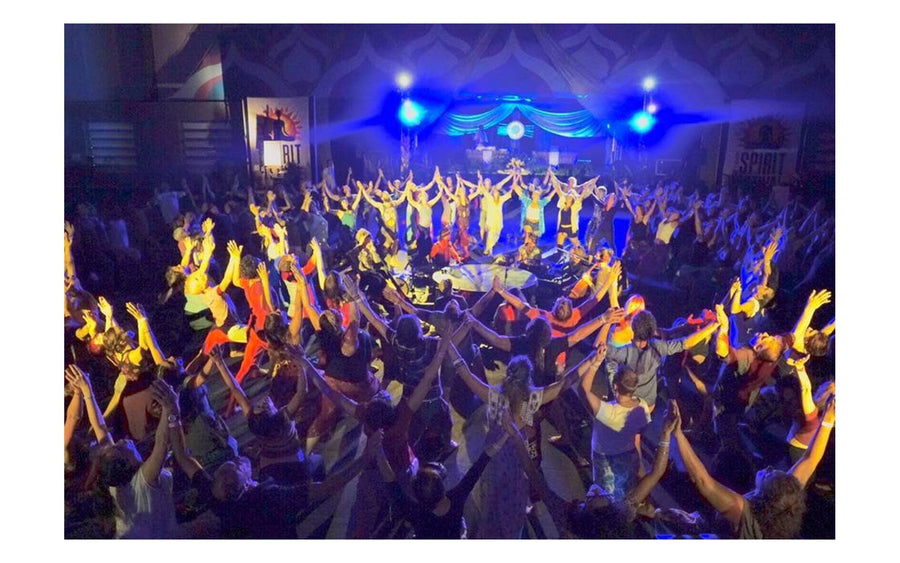
Rethinking student disengagement through relationships, meaningful challenge and flexible teaching, with practical tools for educators, kids yoga teachers and home-learning families.
Imagine a child who cannot concentrate, according to the adults.
This child can also spend forty minutes explaining the rules of an invented universe, organise an elaborate game with friends and notice a microscopic inconsistency in a promise you made last Tuesday.
None of that proves schoolwork is easy for them. It does make “not interested in learning” sound like an incomplete report.
Before attaching the label permanently, we could ask a more useful question: what is this child being asked to learn, under what conditions, and what does participating cost them?
Perhaps they do not understand. Perhaps they understand and are bored. Perhaps the room is overwhelming, the task exposes a difficulty, or success has become indistinguishable from pleasing an adult. Perhaps circumstances beyond school are consuming their energy.
One behaviour can have many explanations. A worksheet cannot tell us which one is true merely by remaining unfinished.
Disengagement is information, not a diagnosis
This is not an argument that every refusal contains profound educational insight or that children should only do things they immediately enjoy. Learning can be slow, demanding and frustrating. Necessary practice is not automatically oppression because it lacks a soundtrack.
It is an argument against treating non-participation as sufficient evidence of a defective learner.
The child still needs teaching. They may also need explicit instruction, specialist learning support, predictable routines, access adjustments, protection from bullying or help with distress. A playful teacher cannot replace those supports with charm.
For kids yoga teachers, the same caution applies. A child who leaves the circle may be tired, uncertain, uncomfortable with touch or uninterested in the activity. “Resistant to mindfulness” is a rather ambitious diagnosis to make between animal poses.
Start with what you can observe. Ask what you do not know.

What flexible education is helping us notice
A paper published in September 2026 by Glenda McGregor, Jeanne Allen and Donna Pendergast examines one Australian flexible school through the idea of “Third Spaces”: learning environments that connect students’ lived worlds with formal education. Its case study draws on historical data and accounts from the school’s early years, not a new national trial. The authors describe relational practices and adaptable provision that supported re-engagement. [1]
This is not evidence that every alternative school outperforms every mainstream school. Flexible provision is not one single pedagogy. Some learners need more structure, some more freedom, and many need a careful combination.
The important challenge is not to copy a school’s atmosphere while omitting its support. Small groups, staff relationships, practical assistance and coordinated services cannot be reproduced by adding beanbags to a conventional classroom.
A beanbag is a chair with a public-relations department. It is not an education reform.
Care and academic ambition are not enemies
UNICEF’s September 2026 Education Strategy calls for stronger systems alongside rethinking how, where and when children learn. It keeps learning, equity and skills at the centre. It is not a declaration that knowledge, schools or teachers have become obsolete. [2]
That distinction matters. It is possible to expect meaningful learning while changing how learners access it. It is possible to teach a skill clearly while allowing different ways to demonstrate understanding.
The future does not require us to choose between competent and cared for.
Likewise, the evidence for play is specific rather than magical. A systematic review and meta-analysis by Skene and colleagues found guided-play advantages for some early learning outcomes, but not every outcome assessed. It does not show that all instruction should be replaced by free discovery. [3]
My practical position is simple: teach explicitly when clarity is needed, guide exploration when it serves the task, and protect free play without demanding an academic justification for every minute.
The five-question engagement check
Before increasing rewards, corrections or reminders, examine five things. This is a planning aid, not a diagnostic checklist.
Meaning: does the child understand what the task is for? “Because it is on the plan” may be true, but it is not always an illuminating introduction.
Clarity: can the child understand the instruction and recognise what to do first? Demonstrating one step may be more helpful than repeating a paragraph louder.
Access: can they see, hear, move, communicate and use the materials in a workable way? Is there too much sensory demand or an avoidable barrier?
Challenge: is the task within reach with support? Too easy and impossibly hard can both look like not trying.
Belonging: can they risk being a beginner without humiliation? Who is watching? Who gets to help? What happens when something goes wrong?
US survey research published by the CDC found school connectedness associated with important protective outcomes. It supports taking the relational setting seriously, while it cannot establish that one new class activity causes those benefits. [4]
A useful yoga-class question is therefore not only “Is this pose suitable?” but “Is this experience safe enough to learn inside?”
Tool 1: separate the learning intention from the performance requirement
Suppose the intention is cooperation. Must every child hold hands? No. Suppose it is recognising shapes. Must every child make a standing triangle with their body? Also no.
Write the learning intention in one sentence. Then identify what can vary: posture, materials, partner arrangement, timing, communication or method of showing understanding.
A child might explore a shape seated, trace it, arrange floor markers, describe it or direct a willing partner. The teaching goal remains visible; the unnecessary demand becomes negotiable.
For home educators, this can prevent an interest-led activity becoming an unstructured hope that learning happened somewhere. Enjoy the exploration, then invite a demonstration of the particular idea you wanted to teach.
Do not claim that every enjoyable activity teaches every desirable capability. Specificity makes play more credible, not less joyful.

Tool 2: build a map, then leave room for an adventure
Start with a short demonstration, clear safety boundaries and an explanation of the goal. Then allow children to investigate within that structure. Finish by checking what they discovered.
In a yoga class, this could mean demonstrating a stable seated or standing balance, offering support and explaining how to stop. Children then invent variations or compare what makes their version steadier. At the end, they show or describe one useful change.
Nobody needs to balance longer than anybody else. Nobody needs to lift another child. A thoughtful adaptation is a discovery, not the consolation prize.
The teacher has not disappeared. They have moved from controlling each answer to supporting the process of finding one.
A ready-to-use learning adventure: build a habitat together
Allow 15–20 minutes. Use this as a guided activity for roughly ages six to eleven, adapting it to learners and space. You need large paper or floor markers, drawing materials and optional blocks. Keep pathways clear and materials appropriate for the children; no climbing or lifting people is involved.
First, invite children to choose an animal they know or an imaginary creature. Ask what it needs: shelter, space, water, food, rest or a way to move. For a real animal, check factual questions with an appropriate source rather than declaring every imaginative guess correct.
Next, small groups design a habitat. A child can draw, arrange materials, suggest ideas, narrate or observe before contributing. Build in enough different roles that the fastest speaker does not become the entire planning department.
Add one challenge: two creatures share the space but have different needs. How will the group make room for both? Children can represent movement through comfortable seated, standing or floor-based choices, or move a marker instead of their body.
Pause for a short explicit teaching moment suited to your goal. You might explain scale, introduce a habitat word or demonstrate a way to measure a route. Then return that knowledge to the problem the children are solving.
Close with evidence of understanding: “Show where your creature rests and explain why.” “What did you change to include the second creature?” “What helped your group decide?” Let children answer through their available communication modes.
This activity is our proposal, not a programme tested by the papers cited here. Its value is that the teacher can make the goal, choices, support and evidence of learning visible.
The philosophical lesson is equally useful: sharing a world means dealing with different needs, not simply asking everyone to become the same creature.
Tool 3: change the challenge before repeating the instruction
When an activity repeatedly fails, adjust one feature and notice what happens. Reduce the number of steps. Offer a visual model. Change the group size. Provide a stable support. Demonstrate the first attempt alongside the child. Allow more processing time.
“Try again” can be encouraging when there is a realistic route to progress. Without a changed strategy or appropriate help, it may only repeat the experience of failure.
Ask, “Would another way help?” Then make sure another way exists.
For parents, this may mean doing the first small step together rather than standing over the entire task. For teachers, it may mean seeking specialist support rather than concluding that enthusiasm is the missing ingredient.
Tool 4: notice learning that a tidy final product can hide
After a cooperative yoga game, record a specific observation rather than an inflated claim.
“They negotiated whose idea to try first.” “They asked to change the distance.” “They explained why their arrangement was more stable.” “They noticed someone had no role and made one.”
These are things that happened. They do not prove a permanent improvement in empathy, executive function or future employability.
Invite children to interpret the experience too. “What did you learn about doing something together?” might produce an answer more useful than our pre-written list of benefits.
A class photo can show the completed shape. It cannot automatically show the quality of the choices, relationships or learning that produced it.
Tool 5: make re-entry possible
Design a way back into the activity after a pause. A child should not need to perform a public apology for being overwhelmed or ask permission from a group that has already labelled them difficult.
Try: “You can watch this round. When you’re ready, choose whether to join the movement or help with the story.” Keep supervision and support clear. A pause space is not a punishment with softer furnishings.
When exclusion or harm is involved, follow the appropriate safeguarding and school processes. A yoga game should not become a substitute for addressing repeated bullying or serious distress.
CDC guidance on restorative practices emphasises relationship-building alongside accountability and support. These approaches require careful implementation; borrowing a repair question does not mean we have delivered an entire evidence-informed programme. [5]
Teachers are not the problem to be fixed either
It would be deeply unfair to criticise child-deficit thinking and then apply teacher-deficit thinking to the adults.
A teacher with too many students, limited access support and no planning time cannot redesign a system through personal virtue alone. Some changes belong with leadership, funding decisions and specialist provision.
In your setting, distinguish what you can change today from what needs a wider response. Put both on the page. Invite families and support staff into the conversation without asking them to carry responsibilities the institution should meet.
This is not “try harder to be a wonderful teacher”. It is “build conditions in which good teaching is possible”.

What this has to do with the future
I do not think the most useful future question is whether children will need knowledge or human skills. They will need both, and the ability to use them responsibly with other people.
A world facing difficult collective decisions needs people who can investigate a claim, revise an idea, understand another person’s needs and remain engaged when a problem is not solved immediately. Those are demanding capacities. They deserve more than motivational posters.
Our classrooms, homes and yoga spaces can offer small rehearsals: meaningful work, accessible challenge, clear teaching, room for disagreement and an adult who stays curious when participation breaks down.
We cannot promise that every child will love every lesson. We can stop treating the fit between learner and environment as the learner’s responsibility alone.
One change to make tomorrow
Choose a child or moment you have been describing as disengaged. Privately review meaning, clarity, access, challenge and belonging. Ask the child what helps. Change one feature, observe and return to their perspective.
Before asking how to bring the child back to learning, ask whether we can bring the learning closer to the child.
Does this mean abandoning explicit teaching?
No. Clear explanation, modelling and practice can be essential. The aim is to use them within responsive, accessible teaching, not set instruction and play against each other.
Is every child who avoids a task giving feedback about the environment?
Avoidance has many possible explanations. Treat it as information to explore, not a diagnosis or proof of poor teaching. Seek appropriate learning, health or safeguarding support when needed.
Can yoga replace specialist learning support?
No. Yoga activities can offer movement, exploration and connection. They are not a substitute for appropriate educational assessment, adjustments, therapy or protection.
Continue with the free Rainbow Yoga Play Audit, children’s voice in class and Play, Feel, Experience.
Photographs: Rainbow Yoga archive. These images illustrate shared practice and are not photographs of the research participants. Research checked 14 October 2026.
Sources and reading
- McGregor, Allen and Pendergast (2026), Australian Flexible Schools as Third Spaces of Educational Innovation and Student Success. Single-school mixed-methods case study using earlier cohorts; published online 22 September 2026.
- UNICEF, Shaping the Future of Learning: Education Strategy 2026, September 2026.
- Skene and colleagues (2022), guided-play systematic review and meta-analysis.
- CDC (2023), School Connectedness and Risk Behaviors and Experiences, US Youth Risk Behavior Survey 2021.
- CDC, Promoting School Connectedness Through Restorative Practices.
The practical tools are Rainbow Yoga proposals, not validated assessments or treatment protocols. Adapt to the child, curriculum, access requirements and professional responsibilities.
Keep exploring
More from Kids Yoga Articles
Kids Yoga Articles
Play, Connection and Kinder Teaching: Your Rainbow Yoga Reading Toolkit
Free kids yoga resources for teachers and families: a printable Play Audit, family activities, child voice, belonging and practical adult-lang...
Read articleKids Yoga Articles
Five Minutes of Family Yoga: Less Perfect Poses, More Connection
Try five minutes of family yoga with no equipment or perfect poses: simple, inclusive games for choice, shared movement and connection, plus t...
Read articleKids Yoga Articles
We Ask Children to Listen to Their Bodies. Are We Listening to Their Voices?
Practical ways to listen to children in yoga, school and family life: meaningful choices, consent, accessible feedback and decisions that genu...
Read article
Comments