
Rainbow Yoga articles
Before We Teach Children Positive Self-Talk, We Should Listen to How Adults Talk to Them
Children’s wellbeing needs an adult curriculum, too. Research, language swaps and practical tools for more thoughtful kids yoga teaching.
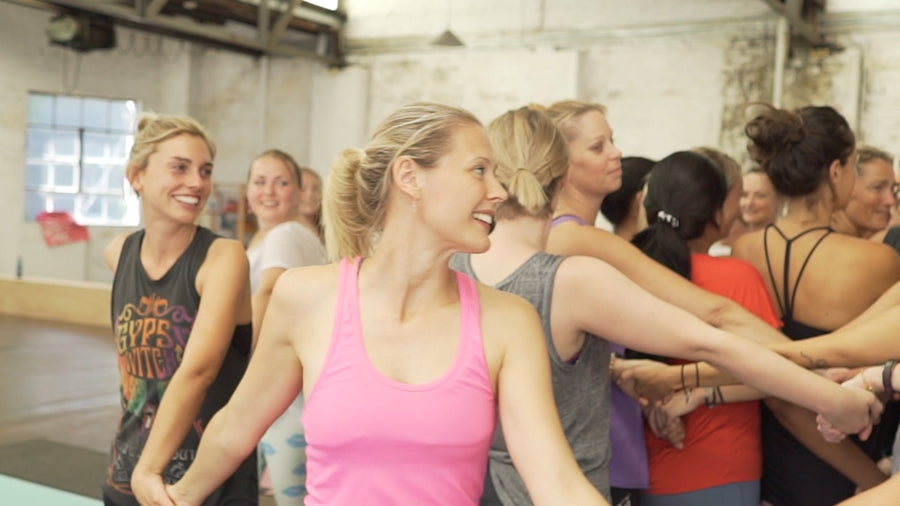
Imagine a children’s yoga class. The mats are colourful. The music is gentle. Somewhere, a small wooden instrument is preparing to represent inner peace.
“I am enough,” the children repeat.
“Stop wriggling, Oliver.”
“I trust myself.”
“No, not like that. You’re doing it wrong.”
“My voice matters.”
“We haven’t got time for your questions.”
The affirmations are having a difficult morning.
This imaginary scene contains an uncomfortable question for anyone who teaches children wellbeing: what happens when the words we ask children to say to themselves contradict the way we speak to them?
We can teach a child to breathe, reframe, regulate, persist, meditate, think positively and manage frustration. These can be useful skills. But a wellbeing programme also needs an adult curriculum: how we speak, hurry, correct, handle mistakes, respond to disclosures, share power, make room for play and create belonging.
Otherwise, we risk giving children an increasingly sophisticated toolkit for coping with conditions the adults have declined to examine.
For those of us who teach children, this is an invitation to practise alongside them. As they learn to ask for help, we can learn to respond. As they practise speaking kindly to themselves, we can listen more closely to the words we use.
That work can begin before tomorrow’s first downward dog.
What the research asks of us
On 8 September 2026, UCL reported findings from a UK study conducted with the charity Words Matter, involving more than 1,000 young people and 600 secondary teachers, with follow-up discussions involving over 100 students and teachers. Among the young people surveyed, 93% said positive teacher communication motivated them to attend school and 94% said it helped them learn. Yet 25% reported experiencing harsh words from teachers. Experiences with teachers had contributed to not wanting to attend school for 34% of respondents, rising to 54% among those with special educational needs and disabilities. UCL’s account of the study.
These findings describe students’ reported experiences, rather than an experiment showing that teacher language caused school avoidance. The research concerns secondary schools, so it cannot tell us whether the same results would apply in a preschool yoga class. What it does offer is a reason to listen closely to how children experience our teaching.
Still, they invite a practical question: when we assess the emotional climate of a class, do we ask the children who experience it?
Earlier research gives that question substantial company. A 2017 meta-analysis by Debora Roorda and colleagues brought together 189 studies involving 249,198 students. The quality of teacher–student relationships was associated with engagement and achievement; engagement partly accounted for the relationship with achievement. This is a large body of evidence for a connection, with substantial observational evidence within it, rather than proof that one encouraging sentence raises a child’s grades. Roorda and colleagues, 2017.
A 2023 systematic review by Shanta Dube and colleagues examined 149 quantitative and 17 qualitative studies of childhood verbal abuse. It found associations with emotional and behavioural difficulties, while documenting inconsistent definitions and measures. A 2026 Delphi study subsequently worked towards a clearer definition through structured consultation with 21 experts, including people with lived experience. Expert agreement helps clarify a field; it does not demonstrate the effectiveness of a classroom intervention. Dube and colleagues, 2023; 2026 consensus study.
We need proportion here. A firm instruction to prevent injury and a pattern of humiliation are different things. We should take harmful speech seriously without turning every imperfect adult moment into a diagnosis. The invitation is to examine what children repeatedly encounter, and what adults do when they get it wrong.
Children learn inside relationships
Children learn about themselves inside relationships. Attachment research helps explain why the relational part of teaching deserves attention. A meta-analytic review by Jessica Cooke and colleagues, covering 72 studies, found that attachment security was associated with patterns of emotional experience and regulation in children. These findings concern parent–child attachment. They do not give a visiting yoga teacher the ability to diagnose attachment styles, repair trauma through a class, or explain a child’s behaviour by guessing what happens at home. Cooke and colleagues, 2019.
For our teaching, the reasonable implication is more modest and more useful: offer repeated experiences of predictable, respectful support. A child can discover that a mistake does not end the relationship, that asking for help is allowed, and that an adult’s “no” can arrive without an attack on their worth.
Our words may become part of how children speak to themselves, but children are not recording devices, and no adult controls their entire inner world. Temperament, peers, culture, disability, family life and material circumstances also matter. We can take responsibility for our contribution without imagining that we explain everything.
But if we want children to practise “I can ask for help”, responding warmly when they actually ask would seem a promising place to start.
Co-regulation gives us another useful framework. In their practice brief for the US Administration for Children and Families, Katie Rosanbalm and Desiree Murray describe adult support for developing self-regulation through warm relationships, environmental structure, and skills instruction and coaching. This is a research-informed developmental framework, not a promise that a calm adult automatically produces a calm child. Rosanbalm and Murray, 2017.
In a yoga room, we might apply it by noticing that a child struggling during relaxation could need something other than another relaxation instruction: less noise, a clearer explanation, permission to sit up, more space, a different activity, or help from a familiar adult.
“Take a deep breath” may be an invitation. Delivered through clenched teeth for the fifth time, it begins to sound like a performance review.
A practical response can be brief: “There’s a lot happening. You can sit here or walk with me to the quieter mat.” If safety requires an immediate boundary, state it: “Feet stay on the floor while people are underneath.” Then help the child find an acceptable next action. Explanations and reflection can wait until the child can use them.
A child who remains upset has not necessarily failed to regulate. Our response has not necessarily failed either. The immediate aim may be enough safety and support to get through the moment.
There is experimental evidence that adults’ emotional communication can be a useful intervention target. In an Australian randomised trial of Tuning in to Kids, 216 parents of preschool children were allocated to a parenting programme or waitlist. The programme improved aspects of parents’ emotion coaching and children’s emotional knowledge; parents and teachers also reported reductions in child behaviour problems. These results came from a structured parenting programme with multiple sessions and follow-up support. A few helpful phrases in a yoga class have not been shown to produce the same effects. Havighurst and colleagues, 2010.
As teachers, we can keep learning alongside the children: how to listen, acknowledge feelings and set limits with care.
For teachers, a useful habit is to acknowledge a feeling without pretending to know more than the child has told us. “You seem disappointed. Have I got that right?” leaves room for correction. “You’re angry because your nervous system feels unsafe” may give an ordinary disagreement an unnecessarily elaborate biography.
Validation also leaves room for limits: “It’s okay to be angry. Throwing the block could hurt someone. Put it down here; then we can work out what you need.” Respect does not require us to become vague about safety.

Words to take into your next class
The words can change without the boundaries disappearing. Try these suggestions in your next class, adapting them to the children’s ages, communication preferences and circumstances. Let them help you find words that are both kind and clear.
| When we might say | Try a more useful invitation or boundary |
|---|---|
| “Calm down.” | “Would you like some space, a little movement, or for me to stay nearby?” |
| “Stop being silly.” | “That game is getting too rough. Let’s make room and try it with feet on the floor.” |
| “Everyone close your eyes.” | “You can close your eyes, look at one spot, or keep looking around.” |
| “You’re fine.” | “Something feels uncomfortable. You can tell me, show me, or take a pause.” |
| “That’s easy.” | “Different bodies find different things challenging. Which version would you like to explore?” |
| “You’re a natural.” | “You moved your feet and found a steadier balance. What did you notice?” |
| “Try harder.” | “Would a different position, some support, or a break help?” |
| “Don’t say ‘I can’t’.” | “It feels difficult. We can change it, ask for help, or leave it for today.” |
| “Be a good girl and give your partner a hug.” | “Choose a wave, a bow, a high-five if you both want one, or no greeting gesture.” |
| “Look at me when I’m talking.” | “I’ll show you as well as tell you. You don’t need to look at my face to listen.” |
| “You’re holding everybody up.” | “We’re moving to the next activity. I’ll help you find your place.” |
| “Say sorry.” | “Let’s check whether they’re okay, then work out how to put this right.” |
Use your own voice. Children deserve ordinary human warmth, not the impression that their teacher has swallowed a counselling handbook.
Specific feedback can also include joy: “I loved seeing you make space for each other.” There is no need to turn every encouraging remark into a scientific instrument. The more consequential habit is to keep feedback about what happened, what helped and what could change, rather than assigning children permanent identities as brilliant, difficult, clumsy or good.
Make encouragement believable
Growth mindset gives teachers another way to think about encouragement, although the evidence is more complicated than the posters suggest. David Yeager and colleagues’ 2019 US experiment, involving 12,490 ninth-grade students in 65 schools, found that a brief intervention improved grades among lower-achieving students and increased advanced maths enrolment overall. Benefits for grades were sustained in settings with supportive peer norms. Because those norms were measured rather than randomly assigned, the study could not establish their causal role. Yeager and colleagues, 2019.
The wider evidence is contested. A 2023 meta-analysis by Brooke Macnamara and Alexander Burgoyne found a very small overall achievement effect that was no longer significant after correction for potential publication bias, and no significant effect in the highest-quality subset. Another review, by Jeni Burnette and colleagues, found benefits in particular groups and implementation conditions. These reviews differ in methods and conclusions; together they give us good reason to avoid selling mindset slogans as a reliable solution to educational difficulty. Macnamara and Burgoyne, 2023; Burnette and colleagues, 2023.
In yoga, the practical lesson is to make improvement possible. If we say “You can learn”, offer time, an accessible variation, useful feedback and help. A child trying tree pose beside a wall has received an actual learning opportunity. A child being told “Believe in yourself!” while falling over has received an inspirational soundtrack.
And sometimes stopping is good judgement. Growth does not require every child to achieve every pose. “Not yet” should never become a way of refusing to hear “That hurts”, “I don’t want to”, or “This version doesn’t work for my body.”
Positive self-talk can then become believable and voluntary: “I can ask for help.” “I can try another way.” “I can take a break.” “My no matters.” Invite children to choose, adapt or pass. They should not have to perform optimism to retain our approval.
Make room for a real “no”
A room becomes more trustworthy when children can disagree with its most powerful person. Psychological safety is a useful lens here: being able to speak up, ask questions or acknowledge mistakes without expecting humiliation. Amy Edmondson’s influential 1999 study examined adult work teams and associated psychological safety with learning behaviour. The study involved adults at work, so it does not establish outcomes for children’s yoga. But it invites a useful question: how safe does it feel to speak up in your class? Edmondson, 1999.
Look for the answer in everyday moments. Can a child tell us our music is too loud? Can they correct our pronunciation of their name? Can they say a partner is pulling too hard? Can they decline a demonstration without being teased? And when they do, does something change?
“Thank you for telling me. I’ll turn it down” teaches more about voice than a poster announcing that every voice matters.
Consent is particularly visible in a movement class. As a teaching practice, explain activities before inviting participation, provide an equally welcome alternative, and ask before optional touch. A parent’s permission for a child to attend does not tell us whether that child wants a shoulder adjustment now. Silence, immobility or going along with the group should not be treated as an enthusiastic yes.
For partner work, agree on the activity first. Invite both children to choose touch or no touch. Rehearse a clear “stop” word or gesture and practise releasing contact immediately. Check again if the activity changes. A child may withdraw halfway through; nobody owes a partner continued bodily access because the class has already started.
Introduce the alternatives together: “You can mirror someone with space between you, make the shape by yourself, or watch first.” A no-touch choice should have a place in the activity, rather than functioning as a small exile.
Respectful consent practices operate alongside adults’ responsibility to prevent harm. We can offer choices about participation while remaining clear about supervision, safe space and necessary protective action. Australia’s National Principles for Child Safe Organisations place children’s participation, rights, equity, child-focused complaints and organisational responsibility within the same framework. Australian Human Rights Commission.
Power-sharing can be wonderfully ordinary. Offer two feasible choices about the story or music. Invite children to invent a transition. Let them propose a class agreement and explain which suggestions you can use. Follow up when you cannot: “We can’t climb on the shelves. We can build a mountain with our bodies on the floor.”
Adults still hold responsibility for safety. Children’s voice should influence real decisions without turning children into unpaid classroom managers.

Let the class breathe, too
Pace is another place where power becomes visible. We may call a class child-centred while requiring every child to process instructions at adult speed.
Try giving one instruction, demonstrating it, and leaving a quiet pause. Notice whether the child needs a visual cue, a shorter phrase, an accessible communication aid or more time. Announce transitions before moving everyone. Make it possible to finish an activity without being publicly described as slow.
If the plan contains eighteen activities and the children need ten, the plan can experience personal growth.
A predictable sequence can make that flexibility easier. Here is a suggested 40-minute class for primary-age children. Adapt it to your group, setting and available support, leaving room for a shorter activity or a longer transition when the children need it.
| Time | How to put care into practice |
|---|---|
| 0–4 minutes | Greet each child by their chosen name. Offer a wave, words or a quiet arrival. Show the class sequence with pictures or a brief explanation. |
| 4–7 minutes | Practise “stop” and “pass”. Explain where the supervised pause space is. Invite a weather-word, gesture or private check-in; passing is welcome. |
| 7–17 minutes | Explore a movement story with seated, standing and floor options. Let children contribute ideas without requiring anyone to perform alone. |
| 17–27 minutes | Offer cooperative mirroring or a shared group shape. Present partner, solo and observing options together. Change an activity if exclusion or discomfort appears. |
| 27–35 minutes | Offer a quieter choice: gentle movement, looking at a fixed object, comfortable breathing or rest. Eyes may stay open. No competition to become the stillest person. |
| 35–40 minutes | Invite feedback: “What helped you join in?” and “What should we change next time?” Accept words, gestures or drawings. Close with an optional self-supporting phrase. |
For younger children, shorten explanations and use repetition, pictures and playful rehearsal. With older children, ask them how they want check-ins handled; a public “feelings weather report” can be less appealing when you are thirteen and your classmates are watching. For children using augmentative or alternative communication, make sure “stop”, “help”, “different” and “pass” are available in a form they can use.
A pause space needs clear supervision and a path back into the group. It should not be a punishment with a cushion. Nor should the rest of the class become an audience to a child’s difficulty.
There is a useful caution from wellbeing research here. The MYRIAD trial, involving 8,376 adolescents, did not find that its universal school mindfulness programme outperformed usual school provision on the primary outcomes at one year. This finding concerns that programme and population; it is not a verdict on all mindfulness or children’s yoga. It does challenge the assumption that teaching a wellbeing technique to everyone will necessarily improve everyone’s wellbeing. Kuyken and colleagues, 2022.
Offer practices as possibilities. Watch what happens. If a child dislikes breath attention, closing their eyes or lying down, help them find another way to participate. Neither a tranquil appearance nor compliance is sufficient evidence that an activity is helping.
Organise belonging
Belonging is something we organise as well as something we say. The US Centers for Disease Control and Prevention identifies school connectedness—feeling cared for, supported and valued by adults and peers—as a protective factor associated with better health and educational outcomes. These associations support taking connectedness seriously; they do not prove that a welcome circle prevents mental illness. CDC on school connectedness.
For a yoga teacher, this means looking at the mechanics of the room. Who is always left without a partner? Who gets the leadership role? Whose body appears in demonstrations? Who has to ask for a modification every single time? Whose name do we repeatedly get wrong?
Avoid public partner selection that predictably leaves someone unchosen. Arrange flexible groups with children’s comfort and access needs in mind. Rotate invitations to lead, without turning leadership into compulsory public performance. Include solo roles within cooperative activities. A child can contribute a sound, an idea, a gesture or careful observation.
Teach variations as part of the normal demonstration: “Here are three ways this animal might move.” Present them with equal enthusiasm. A chair version deserves the same imagination as the floor version; it is not the economy seat on the journey to enlightenment.
Belonging also requires cultural attention. Learn how children and families wish to be addressed. Ask about relevant access, sensory, cultural and religious needs without requiring intimate histories. Explain practices plainly and offer alternatives where needed. Avoid assuming that eye contact, enthusiastic speech, physical closeness or a particular family structure is universal. Follow a child’s own account of their experience rather than interpreting difference as disengagement.
When mockery or exclusion appears, intervene. “That comment puts someone down. We’re stopping it.” Check on the affected child, adjust the activity and follow the setting’s procedures for ongoing concerns. Asking the excluded child to repeat “I belong” while allowing the exclusion to continue would be an unusually elaborate way of missing the point.
An apology needs a sequel
Teachers also make mistakes. We interrupt, misread a situation, lose patience, or discover that our excellent instructions were only excellent inside our own heads. Repair is an adult skill worth rehearsing.
Consider this suggested response: “I spoke sharply when you asked for help. That wasn’t fair. I’m sorry. I’ll explain it again, and you can choose whether to join now or watch first.”
The useful elements are ownership, a specific acknowledgement and a changed next action. Avoid “I’m sorry, but you weren’t listening.” The word “but” has just repossessed the apology.
Do not ask the child to comfort you, forgive you immediately, hug you, or agree that no harm was done. If the mistake was public, correct the public message while respecting the child’s privacy. If you mispronounced a name, practise it. If you overrode a “no”, change the activity and your consent routine. Repair needs a behavioural sequel.
For harm between children, first establish safety and hear what is needed. Offer concrete ways to repair: returning an object, helping rebuild something, changing the rules of a game, or giving requested space. A forced apology followed by a forced hug teaches a rather confused lesson about responsibility and consent.
An apology does not guarantee restored trust. Give the child time, and follow through in what you do next. Serious or repeated adult misconduct requires safeguarding action and organisational accountability. An apology cannot substitute for either.
When a child tells us something serious
Sometimes the words a child needs to say are much more consequential than “I don’t like this game.” A disclosure of harm may arrive during packing up, as an incomplete sentence, or after a quiet question about who can help. A teacher’s role is to listen, support and act through the appropriate safeguarding pathway.
Start by listening without shock, blame or disbelief. Let the child set the pace. A simple response might be: “I’m glad you told me. This isn’t your fault. I’m taking what you’ve said seriously.” Do not promise secrecy. Explain in language they understand that you need to involve people whose job is to help keep children safe. The NSPCC recommends reassurance, careful listening, explaining next steps, prompt reporting and accurate notes. NSPCC guidance.
For the next steps, Australian Institute of Family Studies guidance supports letting children use their own words, avoiding leading or repeated questioning, and seeking only enough clarification to determine necessary action. Do not investigate or confront the person alleged to have caused harm. You do not need a complete account before raising a concern. Explain what you will do next and limit sharing to those who need the information for protection and response. AIFS disclosure guidance.
Keep a factual, secure record as soon as practicable: the child’s words as accurately as possible, the time and context, observations, and actions taken. Follow the setting’s reporting procedure promptly and any direct legal duty that applies to you. Reporting to a manager may not discharge an individual legal obligation. In Australia, who must report, what must be reported and the thresholds vary by jurisdiction and role; know the current rules where you teach. AIFS mandatory reporting guide.
If there is immediate danger, contact local emergency services; in Australia, call 000. Before contacting a parent or carer, follow safeguarding advice where doing so could increase danger or alert an alleged perpetrator. If a concern involves the usual safeguarding contact, use the alternative reporting route or relevant authority. AIFS guidance on reporting child abuse and neglect.
Prepare these contacts and procedures before teaching. Children should not have to wait while we discover whether our safeguarding policy exists somewhere between the attendance sheet and a bag of miniature singing bowls.
Nor should we invite disclosures as a group exercise. Keep check-ins optional and teach children how to seek help privately in a way that preserves appropriate supervision. Breathing practices may support a child alongside protection and specialist care; they cannot carry the responsibility for making an unsafe situation safe.
Support the adults, too
And adults need support to do this work. Asking teachers to be endlessly patient while removing preparation time, staffing and access to advice reproduces the same mistake at a different level: making an individual responsible for coping with an environment nobody will improve.
In the new UCL survey, teachers themselves identified workload, pupil behaviour and curriculum pressures as obstacles to relationship-building. UCL, 8 September 2026.
Research on CARE for Teachers offers one example of professional support. A randomised study involving 224 teachers in 36 New York City elementary schools found sustained benefits in several self-reported measures of wellbeing and emotional regulation at follow-up. These findings suggest that professional support can help teachers, although benefits may vary in other settings. A mindfulness course still cannot replace manageable working conditions. CARE follow-up study.
You need practical backing, too: suitable group sizes and support, preparation time, accessible activities, clear safeguarding routes, and someone competent to consult after a difficult class. Know whom you can turn to before a difficult moment arrives. When you debrief, focus on what you can learn while protecting children’s confidential information. “What support would have changed that moment?” is often more useful than “Why weren’t you more mindful?”

The next practice begins with us
Tomorrow, start small. Choose one habitual phrase to change. Add an explicit right to pass. Leave more time for one transition. Notice a child who is usually overlooked. Make one repair you have been avoiding. Before packing away the mats, ask what the children would change—and make room for the answer.
None of this requires us to become flawless. It asks us to become accountable, curious and willing to learn in the very ways we encourage children to learn.
There is room here for laughter, noisy animal adventures, improbable group shapes and the profound spiritual experience of discovering that your yoga sock has a hole in it. Joy does not need humiliation to keep order. Warmth can carry a clear boundary. Play can make room for a quiet child. An adult can lead and still listen.
A child who says “I am enough” deserves adults whose everyday behaviour gives that sentence somewhere to land.
We can keep teaching resilience. We can also stop treating resilience as the child’s obligation to make every environment bearable.
Instead of endlessly asking how to make children more resilient to their environments, we can ask how to make those environments more worthy of resilient children.
And because we are part of those environments, the next practice begins with us: with the tone we use, the pause we allow, the boundary we hold, the mistake we repair, and the child we make room for.
Before we ask children to find a kinder voice inside themselves, let us give them more chances to hear one outside.
Keep exploring
More from Kids Yoga Articles
Kids Yoga Articles
When Children Tell Machines What They Cannot Tell Us
Children are turning to AI for advice, reassurance and emotional support. Here is what parents, educators and yoga teachers need to notice, te...
Read articleKids Yoga Articles
Yoga Is Not Automatically Body-Positive: The Teacher Makes the Difference
Yoga can support children’s body confidence, but poses alone are not enough. Teacher language, choice, representation and class culture make t...
Read articleKids Yoga Articles
Grandpa Gopala Says... A Grandfather's Guide to Growing Up (At Any Age)
A joyful collection of 74 Grandpa Gopala sayings from Rainbow Yoga, gathered into one visual guide for growing up with wonder, play, kindness,...
Read article
Comments